
Understanding real estate investing can feel confusing at first. New investors often get stuck on basic terms and math. One of the most important concepts you must learn is the cap rate formula. This simple calculation can help you compare properties, understand potential returns, and decide if a deal is worth the money.
In this guide, our team of informational experts explains what the cap rate formula is, how the cap rate formula works, and how to calculate cap rate using easy examples. We keep the language simple, the paragraphs short, and the explanations clear enough for a middle-school student to understand.
Let’s get started.
What Is the Cap Rate Formula?
The capitalization rate, or cap rate, is a basic formula used in real estate to measure how much income a property can generate compared to its price. Investors use it to understand how quickly they can earn money back from a property.
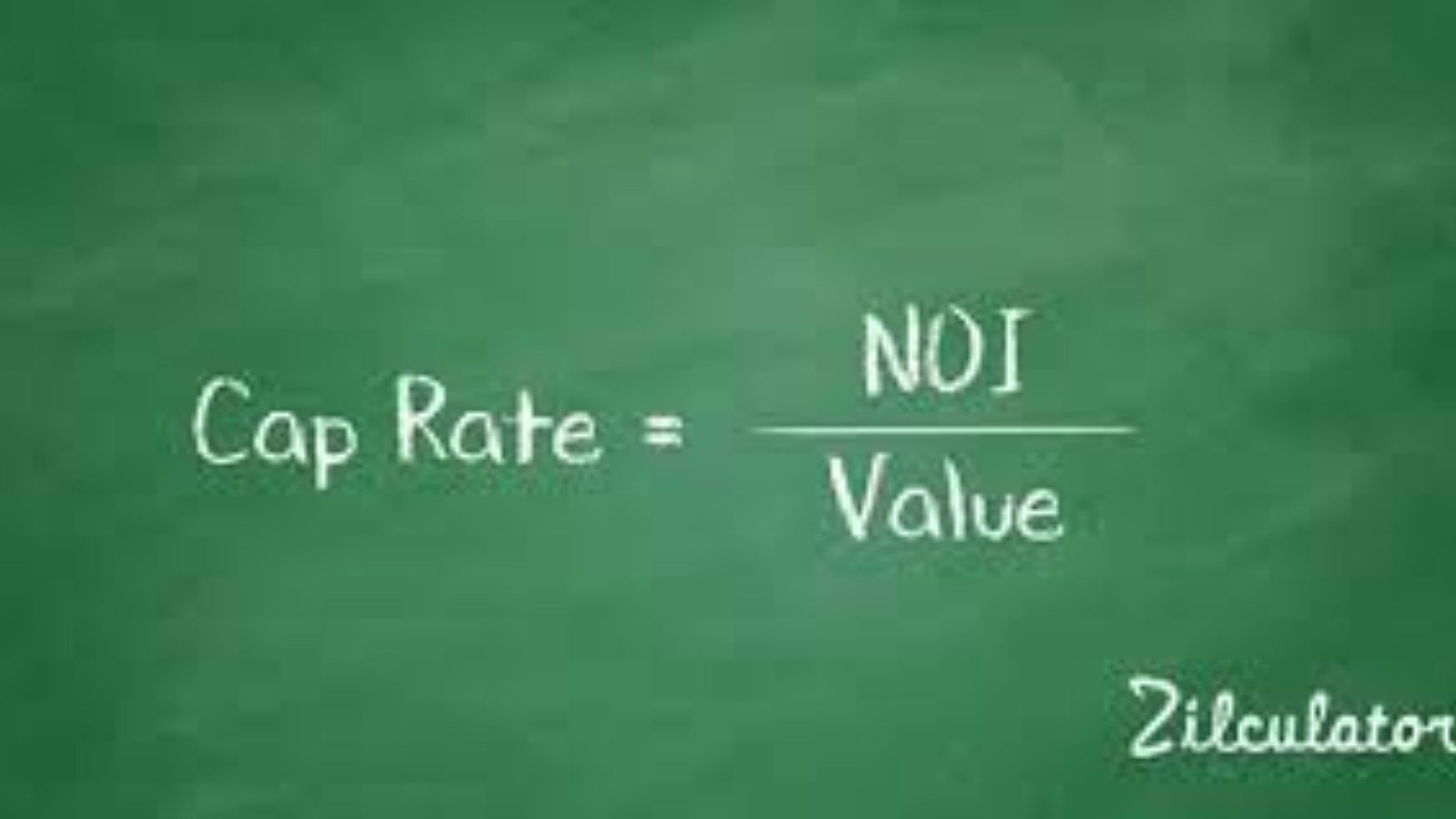
The cap rate formula looks like this:
Cap Rate = Net Operating Income (NOI) ÷ Property Value
This formula tells you the expected rate of return if you bought a property with cash. In simple words, the cap rate helps you compare profit vs. price.
Cap rate is one of the most used tools in real estate investing. It helps investors:
- Compare different properties
- Understand how risky an investment might be
- Estimate future profits
- Decide whether a property is overpriced or underpriced
You will see cap rates used in commercial real estate, rental homes, small apartments, and large apartment complexes.
Why the Cap Rate Formula Matters
The cap rate formula matters because it shows how well a property might perform financially. Many new investors choose properties just because they “seem nice.” But real estate investing isn’t about looks. It’s about numbers.
Using the cap rate formula helps you make smarter decisions because:
- It tells you if a property produces good income
- It helps you compare one investment to another
- It reveals whether the price makes sense
- It lets you measure potential risk
A higher cap rate usually means higher risk but higher potential return.
A lower cap rate usually means lower risk but lower return.
Understanding the Parts of the Cap Rate Formula
To understand how to calculate the cap rate formula, you must first understand the two key parts: Net Operating Income and Property Value.
1. Net Operating Income (NOI)
Net Operating Income (NOI) is how much money a property makes after you subtract operating expenses. These are the basic costs to run a property.
NOI includes:
- Rent collected
- Parking income
- Laundry income
- Any extra fees or charges
NOI subtracts:
- Property taxes
- Insurance
- Repairs
- Maintenance
- Property management fees
- Utilities paid by the owner
- HOA fees
- Advertising
- Other operating costs
NOI does not include:
- Mortgage payments
- Income taxes
- Depreciation
Think of NOI as the true earnings of a property before paying the loan.
2. Property Value
The second part of the cap rate formula is the value of the property. This can be:
- The price the seller is asking
- The amount you plan to offer
- The estimated market value
- The appraised value
Using the actual purchase price gives you the most accurate calculation.
How to Calculate the Cap Rate Formula (Step-by-Step)
Let’s break down how to calculate cap rate in the easiest way possible.
Step 1: Find the NOI
Add up all yearly income from the property.
Subtract all yearly operating expenses.
Example:
- Total income: $24,000 per year
- Total expenses: $6,000 per year
NOI = $24,000 − $6,000
NOI = $18,000
Step 2: Use the Property Value
Let’s say the property costs $300,000.
Step 3: Use the Cap Rate Formula
Cap Rate = NOI ÷ Property Value
Cap Rate = $18,000 ÷ $300,000
Cap Rate = 0.06 or 6%
This means you would earn a 6% return per year if you bought the property in cash.
What Is a “Good” Cap Rate?
There is no single “good” cap rate because the answer depends on:
- The location
- The type of property
- Market conditions
- The risk level
But here are common ranges:
- 4% to 6%: Low-risk, stable areas (safe but lower income)
- 6% to 8%: Balanced areas (good mix of income and safety)
- 8% to 12%: Higher-risk neighborhoods (higher income but more uncertainty)
A good cap rate is one that fits your goals. If you want stable income, a lower cap rate may be fine. If you want bigger returns, you might choose a higher cap rate.
Cap Rate Formula Example (Beginner Friendly)
Let’s imagine you find a rental house.
Yearly income:
- Rent: $1,500 per month = $18,000 per year
Yearly expenses:
- Taxes: $2,000
- Insurance: $1,000
- Repairs: $1,500
- Management: $2,000
Total expenses = $6,500
NOI = $18,000 − $6,500 = $11,500
Purchase price: $180,000
Now plug into the cap rate formula:
Cap Rate = $11,500 ÷ $180,000
Cap Rate = 0.0638 or 6.38%
This gives you a solid estimate of how the property performs.
Cap Rate vs. Cash-on-Cash Return
Many beginners confuse cap rate with cash-on-cash return, but they are different.
Cap Rate:
- Assumes you buy the property with cash
- Uses NOI and property value
- Does not factor in mortgage payments
Cash-on-Cash Return:
- Measures return based on your actual cash invested
- Includes mortgage costs
- Useful if you use financing
Example:
A property could have a 5% cap rate, but your cash-on-cash return could be 10% if your loan terms are good.
When to Use the Cap Rate Formula
Investors use the cap rate formula in many situations. Here are the most common uses:
1. Comparing Two Properties
If you are looking at two rental houses, the one with a higher cap rate gives a higher return for the price.
2. Checking If the Price Is Fair
If a property has a very low cap rate, it might be overpriced.
If a property has a very high cap rate, it might come with risks.
3. Measuring Risk
Higher cap rate = higher risk.
Lower cap rate = lower risk.
4. Estimating Future Profit
Cap rate tells you roughly how much you may earn each year.
Limitations of the Cap Rate Formula
Even though the cap rate formula is useful, it is not perfect. You should not make decisions based on cap rate alone.
Here are the main limitations:
1. It Does Not Include Mortgage Payments
Cap rate assumes you buy the property with cash. In real life, most people use loans, which change the return.
2. It Ignores Appreciation
Some properties grow in value over time. Cap rate only measures income, not future price increases.
3. It Depends on Accurate Numbers
If the seller gives incorrect expense numbers, your cap rate calculation will be wrong.
4. Markets Change
A cap rate today might not match a cap rate next year.
This is why investors use cap rate as one tool, not the only tool.
Cap Rate Formula for Commercial Properties
In commercial real estate, the cap rate formula works the same way, but the numbers are larger and more complex.
Commercial properties include:
- Office buildings
- Retail stores
- Warehouses
- Shopping centers
- Large apartment buildings
Investors use cap rates heavily in commercial real estate because they want to:
- Compare different buildings quickly
- Understand which markets are hot
- Estimate long-term profitability
Commercial cap rates vary by city, neighborhood, and type of business.
How Market Trends Affect Cap Rates
Real estate markets change all the time, and these changes affect cap rates.
1. Interest Rates
When interest rates rise, cap rates often go up because investors expect higher returns.
2. Property Demand
If an area becomes popular, prices go up and cap rates go down.
3. Local Economy
Job growth, new businesses, and construction can change cap rates.
Understanding these trends helps investors avoid overpaying.
Cap Rate Formula in Different Real Estate Niches
Different types of properties have different typical cap rates.
Single-Family Homes
Usually have lower cap rates because they are easier to manage and located in stable areas.
Small Multifamily Properties
Duplexes, triplexes, and fourplexes often have higher cap rates.
Large Multifamily Apartments
Cap rates vary based on location and building age.
Vacation Rentals
Cap rates can be unpredictable because income depends on tourism and season.
Using Cap Rate to Evaluate Deals
When you find a property, here’s how to use the cap rate formula to evaluate it:
- Collect income and expense data
- Calculate the NOI
- Divide NOI by the purchase price
- Compare the result to similar properties in the area
- Decide if the property meets your goals
If a property has:
- Strong income
- Reasonable expenses
- A cap rate that matches your target
…it might be a good investment.
Final Thoughts
The cap rate formula is one of the simplest and most powerful tools in real estate investing. It helps you understand potential income, compare deals, and avoid buying a property that does not make financial sense.
To recap:
- Cap Rate = NOI ÷ Property Value
- Higher cap rate means higher risk but higher return
- Lower cap rate means lower risk but lower return
- Cap rate is a starting point, not the final decision
- Use it along with other metrics to make smart choices
By mastering the cap rate formula, you can become a more confident investor and make smarter real estate decisions.